Navratri Protection at Home: Inviting Maa Durga’s Grace Into Daily Life
Navratri turns the home into a quieter temple: lamp light, flowers, and the name of Maa Durga spoken with care. Many families look for a lasting reminder of that protection after the nine nights end. A Durga Raksha Kavach can become that daily thread of devotion—worn or kept with respect, never treated as a charm for spectacle.
Navratri as a season of Shakti in the home
Navratri is a season when Shakti is remembered with special intensity—nine nights of song, fasting or mindful eating, and household puja according to each family’s capacity. Some homes keep elaborate ghata-sthapana; others keep a single lamp and a clean corner. Both can be sincere.
The season teaches that protection is not only an outer wall. It is also the courage to live righteously, the clarity to face fear, and the tenderness to care for those under your roof. Maa Durga’s grace is approached through remembrance, not through panic shopping.
Whether you read this during Navratri or in the quieter months after, the same invitation stands: bring Shakti into daily life with respect.
Simple, respectful home practices (lamp, altar cleanliness, remembrance)
You do not need extravagance. A clean altar space, a lamp in the evening, fresh water or flowers when available, and the Name spoken with attention already form a strong foundation. Involve children gently if they wish; never force fear stories upon them.
Keep the home’s entry and puja area tidy. Many families prefer to avoid harsh speech during the nights of worship. Charity according to means—food, clothes, or quiet help—fits the spirit of the season better than display.
If you already follow a family paddhati (method), stay with it. This article does not invent muhurats or claim a single “correct” calendar for every region. Local tradition and your elder’s guidance remain valuable.
What “Raksha” points to in Durga devotion
Raksha means protection—shielding, guarding, keeping safe. In Durga devotion, raksha is the Mother’s fierce compassion: She protects dharma and the devotee who takes refuge. A “Durga Raksha” offering therefore points to wearable or keepable remembrance of that shielding grace.
It is not a claim that conflict will vanish overnight, nor a medical or legal guarantee. It is a traditional way to keep Maa’s presence near the body and the home altar’s intention close to daily life.
For broader reading on protection themes in an astrology-remedy style essay, you may skim negative energy and Nazar Dosh—then return here for the product path itself.
Introducing the Durga Raksha Kavach as wearable remembrance
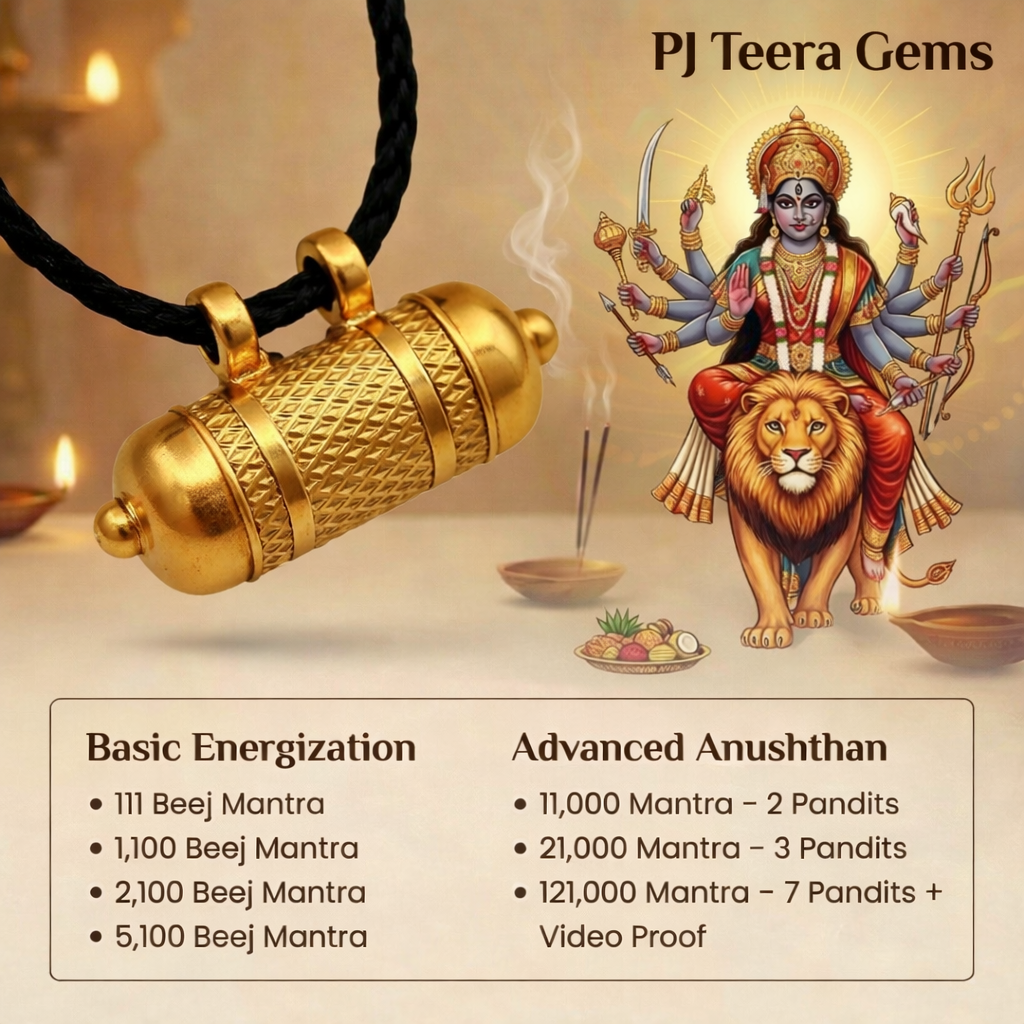
The Durga Raksha Kavach at PJ Teeragems is offered as a pure silver divine protection amulet. It is meant for devotees who want a tangible, respectful companion for Navratri and for the ordinary days that follow.
Craftsmanship and sacred intent
View the product photos for form and finish. Pure silver craftsmanship gives the piece dignity for daily wear or for keeping near the altar when not worn. Sacred intent matters as much as metal: the kavach is prepared as a devotional object, not as costume jewelry.
Energizing with Beej Mantra jap (see product options)
Before Proceed to buy, select Beej Mantra on the product page. Guest checkout works once that selection is made. See the product page for Beej Mantra options and current pricing—this blog will not invent amounts or rank options as “miracle tiers.”
Wearing / keeping the kavach during and after Navratri
During Navratri, some devotees wear the kavach through the day and place it near the altar during evening aarti. Others keep it on the altar and wear it after the nine nights as a continuing reminder. Follow what your heart and family custom support.
After Navratri, the kavach remains meaningful. The season’s intensity fades into weekly lamps and quiet japa; the pendant can travel with you to work or study as a thread of the same remembrance. Keep it clean, avoid careless handling, and retire it respectfully if it ever becomes damaged beyond dignified wear.
You do not need to buy a kavach to “complete” Navratri. Purchase is optional support for devotion—never a fear requirement.
Building a gentle nine-night rhythm without overwhelm
If this is your first intentional Navratri at home, start small. Night one: clean the corner and light a lamp. Night two: add a short Durga stotra or even three sincere namas. Night three: offer fruit or a simple homemade sweet if your tradition allows. Spread effort across the nights so the household stays joyful rather than exhausted.
Working devotees overseas often keep shorter evening practices after office hours. That is valid. Shakti is not impressed by performance; She receives attention. A Durga Raksha Kavach can sit on the altar during those short evenings and travel with you on weekdays as a reminder that the season’s vow continues in ordinary time.
Couples and joint families sometimes disagree on how elaborate puja should be. Agree on a minimum everyone can keep with peace. Optional extras can be offered by whoever has energy—without shame for those who need rest.
Teaching children without fear
Speak of Maa as Mother who protects and guides, not as a threat used to control behavior. Let children place flowers, ring a small bell, or say a short name. If they ask about the kavach, explain it as a sacred reminder—like a photo of someone you love kept close—not as a magic shield that replaces kindness or courage.
For India & overseas devotees (shipping calendar awareness—no invented dates)
Devotees in India, the US, the UK, and elsewhere order with their own calendars in mind. Festival peaks can affect courier load. Place orders with gentle buffer rather than last-minute panic, and read shipping notes at checkout. This article will not invent delivery dates or muhurat guarantees.
If you are choosing between Hanuman and Durga as a first protection pendant, see our comparison guide when available: Hanuman Kavach vs Durga Raksha Kavach. Another beloved path is the Hanuman Kavach—one line of kinship, not a replacement for Maa’s path if Durga is where you lean.
Altar placement and daily touchpoints
If you keep the Durga Raksha Kavach on the altar, place it where it will not be knocked by busy hands—near the murti or framed image of Maa, on a clean cloth. When you wear it, put it on after bathing when practical, and remove it respectfully before sleep if your tradition prefers jewelry off at night. Some devotees sleep with sacred threads or pendants; follow your own comfort and family guidance.
Pair the kavach with one daily touchpoint you can keep all year: evening lamp, Thursday or Friday Devi remembrance, or a short stotra. Navratri intensity then becomes a peak within a longer rhythm rather than a nine-day sprint that leaves the rest of the year empty.
Overseas apartments and shared spaces
In apartments abroad, space may be small and roommates may not share the same faith. A compact altar on a shelf, a foldable cloth, and a discreet kavach under the shirt can preserve dignity without conflict. You do not need a temple hall to invite Maa’s grace. Quiet consistency beats loud display.
When shipping overseas, order with buffer before travel or festival gatherings. Checkout shows available methods; this guide will not invent transit days.
Soft Grantha note for personal questions
Questions about family tradition, chart sensitivity, or which Beej Mantra option to select can feel heavy. If you want a short conversation, visit Grantha. It is a soft, optional lane—not a requirement for Navratri sincerity.
Bring the season into dedicated practice—product CTA
Invite Maa Durga’s grace with clean practice at home, and if you wish for a wearable reminder, open the Durga Raksha Kavach page, select Beej Mantra, and order with devotion.
Optional: Grantha. May your Navratri—and the ordinary days after—remain lit with courage and care.