Kamdev Kavach, Held as Tradition
A Kamdev kavach and a song half remembered
The scene below is a story, not a review from a buyer.
A rehearsal room in Boston
Joseph played a scale in a rented rehearsal room in Boston and stopped halfway. He had been asked to learn a composition that mentioned Kamadeva, a name he knew only from a textbook myth: the god with a sugarcane bow, interrupted by Shiva, mourned and restored in the old stories. A friend from Pune had once said her family kept the name in festival songs, not as a trick and not as advice. Joseph wrote the name in the margin of his score so he would look it up properly later, instead of guessing.
What the pendant is
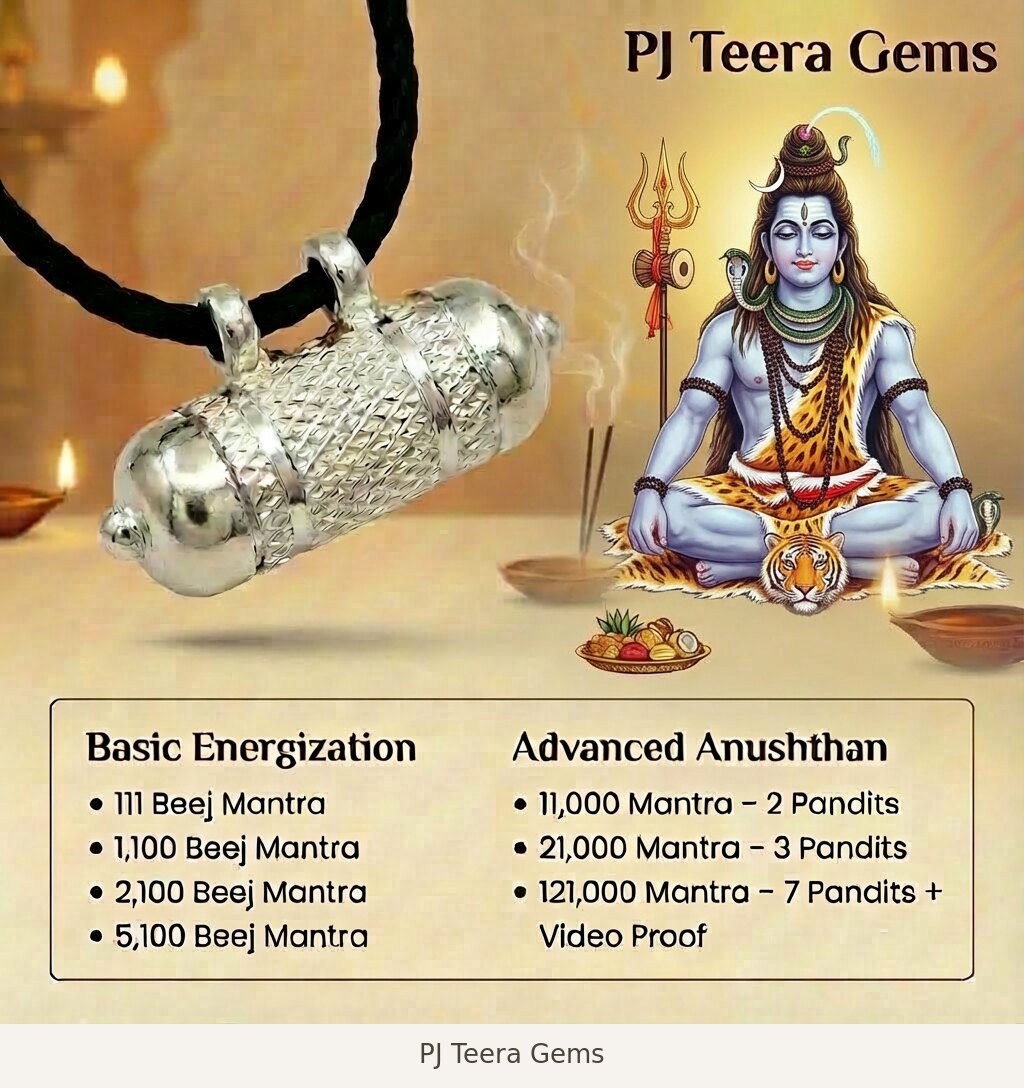
PJ Teera Gems lists a Kamdev kavach as an ashtadhatu pendant. Ashtadhatu is a traditional eight-metal blend. The product text also mentions pure silver, so use the metal shown on the live page. The shop describes a counted beej mantra preparation and states a minimum of 21,000 repetitions. That is a workshop practice in India.
This needs a clear boundary. Kamadeva's stories are part of a sacred literature. Wearing a pendant is a devotional or cultural act for someone who wants that literature close. It is not a method for changing another person's feelings, and this shop note will not pretend otherwise. No pendant arranges a private life. If you want the object, want it as an object of tradition.
How people traditionally wear it
Where a kavach is worn, it rests at the chest on a chain or a thread. It goes on with clean hands and comes off for the pool. Some devotees recite a short name repetition. Some only keep the pendant near the books and songs where the deity appears. Both are respectful. Do not wear another person's ritual object as a costume. Dry the metal, replace a tired cord, and keep perfumes from filming the surface.
The listing
The piece ships from India. Kavach pages on the site show free shipping to the US and the UK and a modest fee for many other countries, with international delivery often around 7 to 12 days and tracking. Read the options before you pay.
If the name reached you through a poem, a dance, or a raga, go back to that poem before you buy metal. Read a full telling, not a caption. Notice how the story sits inside a larger world of Shiva and household rites. A kavach makes sense after that reading, as a marker that the myth matters to you. It does not make sense as a tool aimed at another person. Leave that use alone.
The Kamdev kavach is here: Kamdev kavach.